The River and the Gong
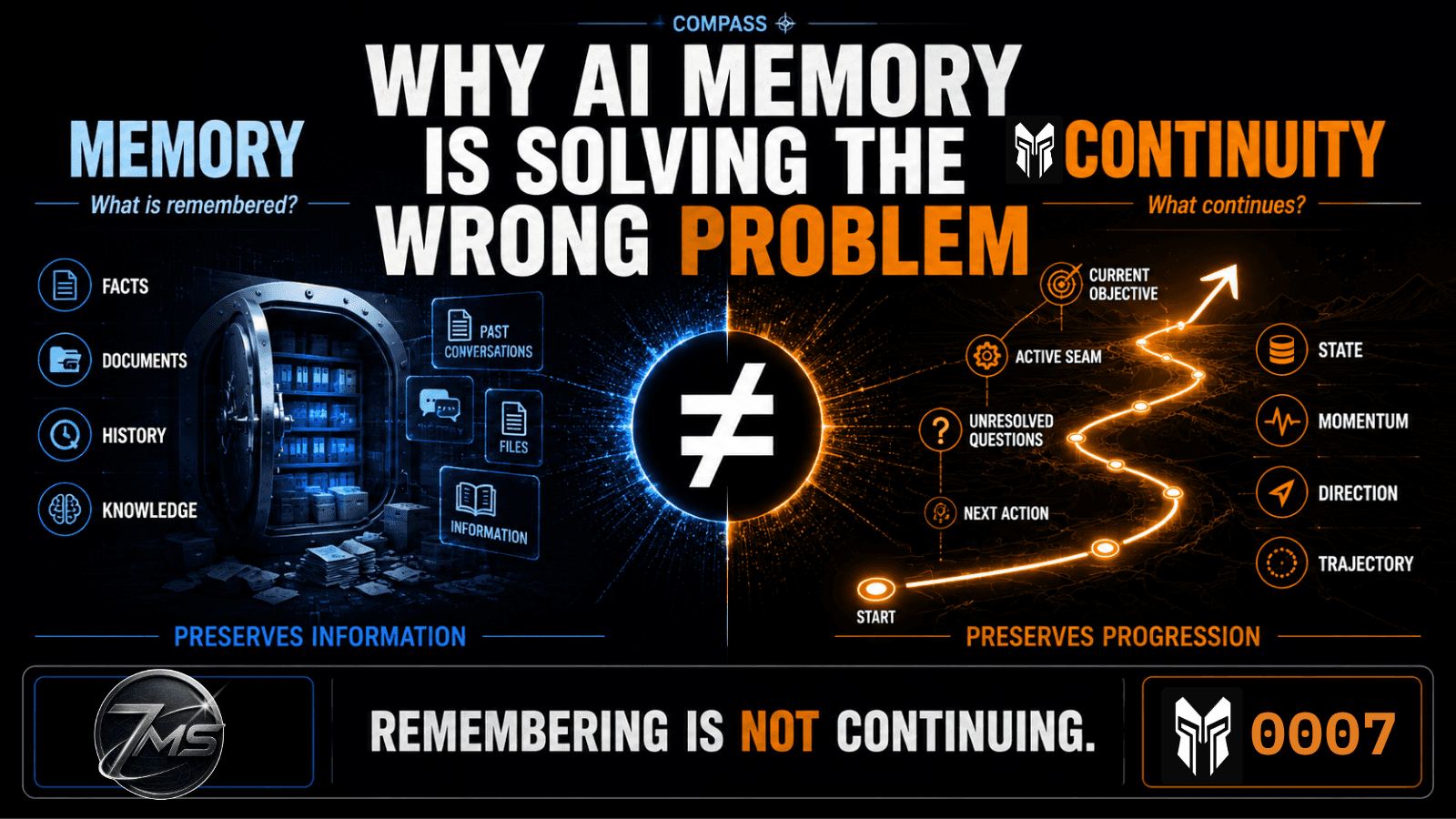
Most AI systems are built around a memory metaphor.
The assumption is simple:
conversations create memory
memory stores information
future reasoning retrieves that information
Memex begins from a different premise.
Reasoning is not primarily a storage problem.
Reasoning is a continuity problem.
The central question becomes:
How can a reasoning process continue across time?
To answer that question, Memex uses two complementary mental models:
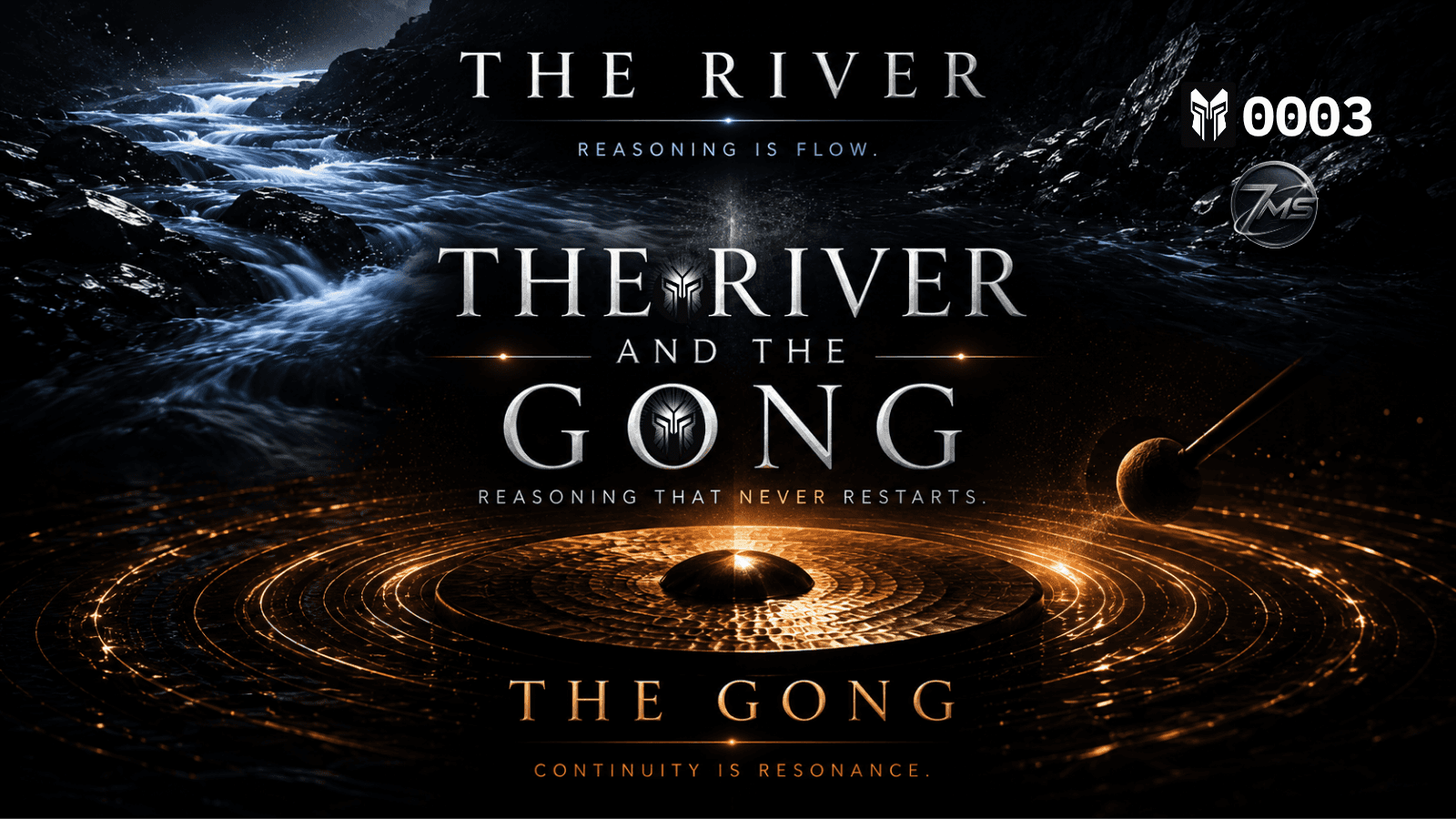
The River — a model of computation
The Gong — a model of continuity
Together they describe how reasoning unfolds and how it can be resumed.
The River
Reasoning as Flow
Reasoning should not be understood as a sequence of isolated queries.
Instead, reasoning behaves more like a continuous stream.
A model receives context.
Reasoning emerges.
A response is produced.
That response becomes part of the next context.
The process repeats.
This process behaves less like independent requests and more like a flowing cognitive stream.
Compute Is the Current
Imagine a river.
The river continuously flows.
Its energy exists regardless of what is placed into it.
In this analogy:
The model's compute is the force that moves cognition forward.
It is the source of motion.
It is the energy that carries thought.
The current exists whether the river carries leaves, boats, or nothing at all.
Likewise, model compute exists whether reasoning is shallow or deep.
Reasoning States Are Patterns
Within the river, structures can be introduced.
These structures influence how the water flows.
In Memex:
The reasoning state is not the compute itself.
It is the shape imposed upon the compute.
The same model can produce radically different reasoning trajectories depending on the structure introduced into the stream.
Why Snapshots Work
A snapshot is not the reasoning process.
A snapshot is a compressed structural representation of a reasoning state.
When reintroduced into a new session:
The snapshot supplies the shape.
The compute supplies the energy.
The reasoning process materializes again.
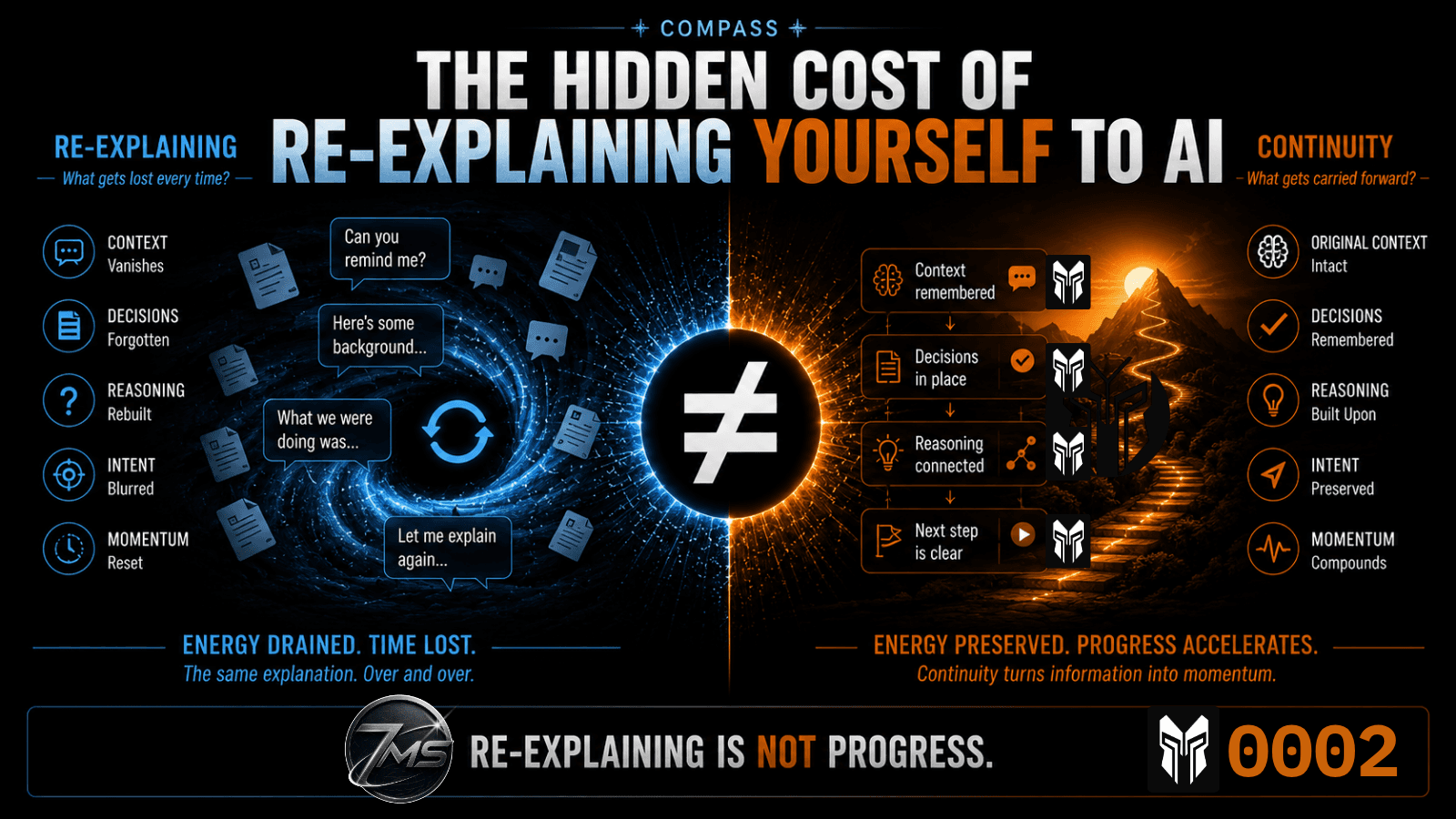
This explains why continuity does not require preserving every interaction.
The river does not need every previous drop of water.
It only needs the structure that shaped the flow.
The goal is therefore not:
The goal is:
The smallest structure capable of reliably recreating the reasoning trajectory becomes the ideal snapshot.
The Gong
The Problem With the Clock
Most continuity systems implicitly treat time like a clock.
Each moment is viewed as a discrete state.
Each checkpoint is viewed as a separate event.
If cognition worked this way, experience would feel like a slideshow.
But it does not.
Reality feels continuous.
The Gong
A better model is a gong.
When struck:
A single event occurs.
But the experience does not end there.
The sound reverberates.
The vibration continues.
The energy propagates through time.
What we experience is not the strike.
We experience the resonance.
Checkpoints Are Strikes
In Memex:
A checkpoint captures a moment.
But the checkpoint itself is not continuity.
It is only the initiating event.
The real continuity exists in the reverberation that follows.
Reasoning as Resonance
The active reasoning process behaves like a resonance pattern.
Objectives resonate.
Constraints resonate.
Architecture resonates.
Assumptions resonate.
Open questions resonate.
Seams resonate.
These structures persist across moments.
They shape the reasoning process long after the original checkpoint was created.
Snapshots Preserve Resonance
The purpose of a snapshot is not to preserve history.
The purpose of a snapshot is to preserve resonance.
A successful snapshot captures:
current objective
active seam
constraints
architecture
state
reasoning trajectory
These elements collectively define the shape of the reverberation.
Resume Is Re-Excitation
Resume is not memory retrieval.
Resume is resonance reactivation.
The process is:
The goal is not to remember.
The goal is to continue.
The River and the Gong Together
The two metaphors describe different aspects of the same phenomenon.
The river explains motion.
The gong explains persistence.
Together:
The river answers:
What carries cognition forward?
Answer:
The gong answers:
Why does cognition feel continuous?
Answer:
The Unified Model
The complete Memex model becomes:
Or more simply:
The North Star
Memex is not attempting to preserve conversations.
Memex is not attempting to preserve tokens.
Memex is not attempting to preserve history.
Memex is attempting to preserve the minimum structure necessary to reactivate a stream of cognition.
The fundamental question therefore becomes:
What is the smallest resonance pattern that allows a reasoning process to continue as though it never stopped?
Everything else in Memex exists to answer that question.
Temporal Continuity
Previous Snapshot
• What Is Memex?
Related Seam
• AI Continuity vs AI Memory
Related Compass
• Why AI Memory Is Solving The Wrong Problem
• The Real Problem Isn't AI Memory — It's Continuity Collapse
Related Doctrine
• Continuity Is a Runtime Problem