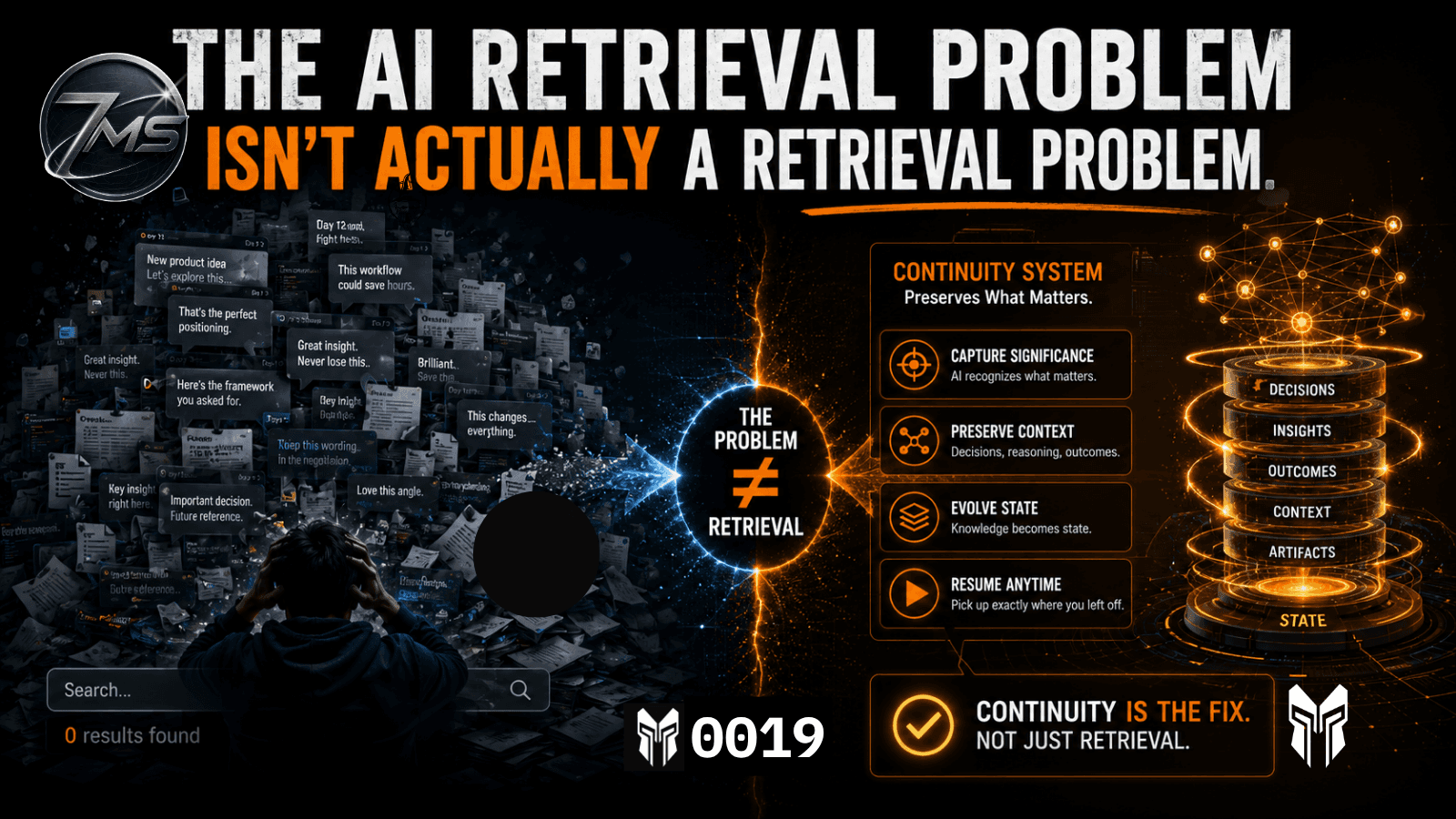


The Signal Of A Snapshot
Most builders think continuity is a better summary. A snapshot is something very different. It is a structured continuity signal transmitted across time so work can continue without reconstruction.
by
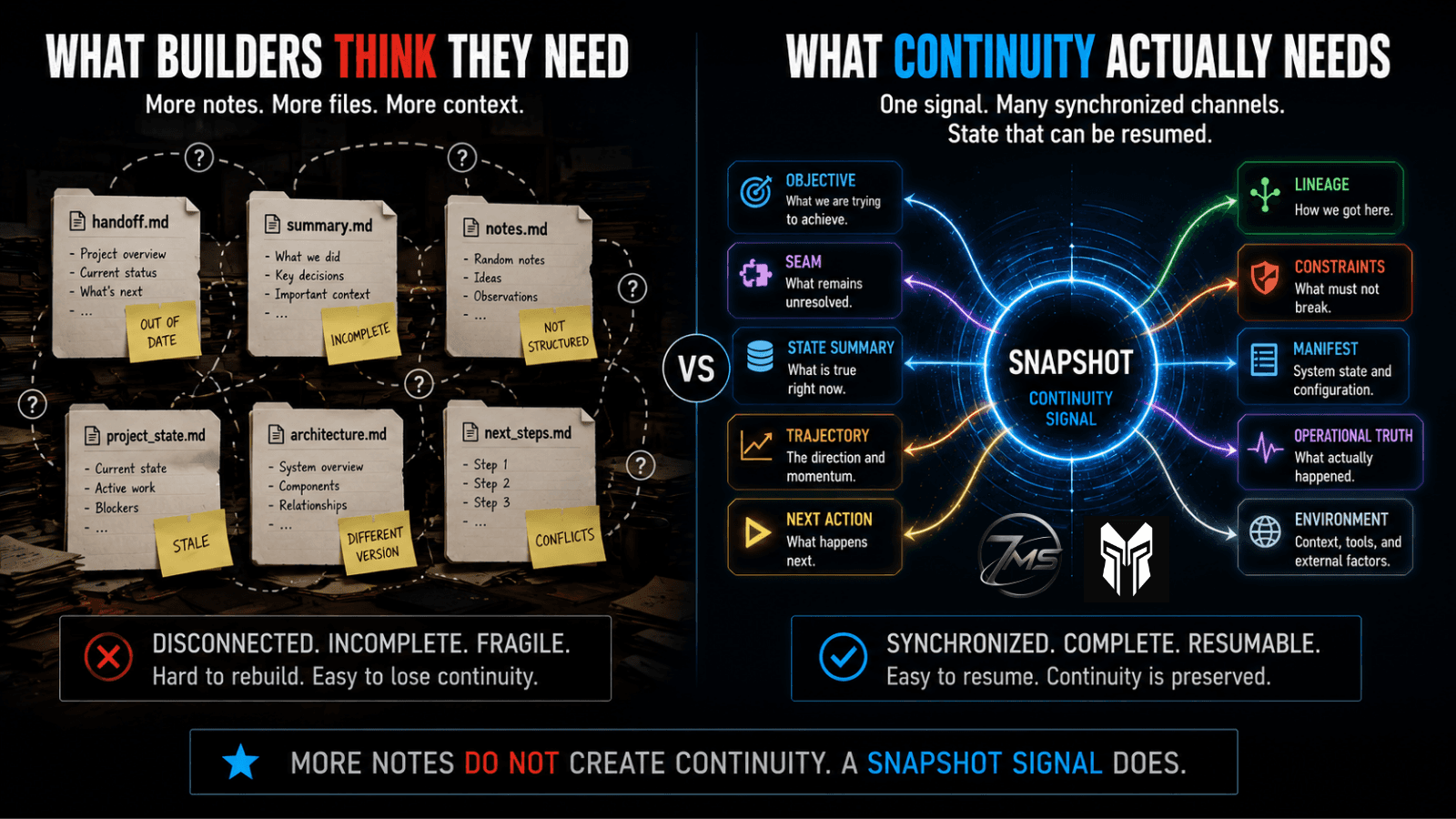
Most builders think continuity is a better summary.
A better handoff.
A better note.
A better markdown file.
This assumption appears reasonable.
Until the work becomes large enough that continuity matters.
Then it collapses.
Because continuity and documentation are not the same thing.
When a session ends, most builders preserve information.
A summary.
A handoff.
A project note.
A markdown file.
The assumption is simple.
If enough information survives, continuity should survive with it.
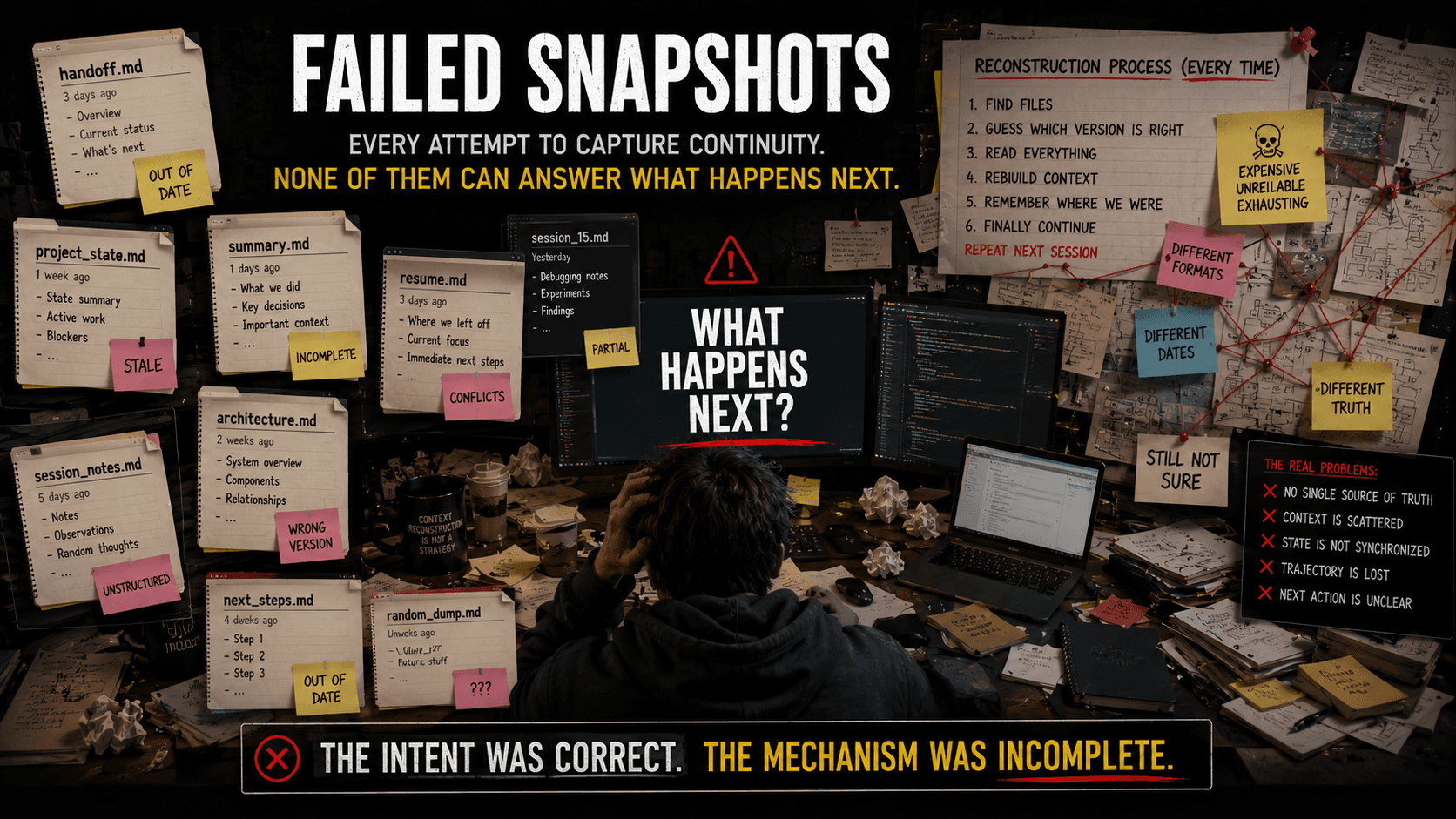
Yet every experienced builder knows what happens next.
New session.
Upload files.
Explain architecture.
Explain objectives.
Explain current status.
Explain next steps.
Wait for confidence to rebuild.
Continue.
The notes survived.
The continuity did not.
A summary answers:
What happened?
This is useful.
But continuation requires a different question.
What must survive?
The distinction matters.
Because long-running projects rarely fail from missing information.
They fail from missing state.
Direction disappears.
Momentum disappears.
Trajectory disappears.
The work pauses.
The reconstruction begins.
Most builders are already trying to solve this problem.
They just do not realize it.
Every:
handoff.md
summary.md
project_state.md
session_notes.md
is an attempt to preserve continuity.
A primitive save game.
A manual checkpoint.
A reconstruction artifact.
The intent is correct.
The mechanism is incomplete.
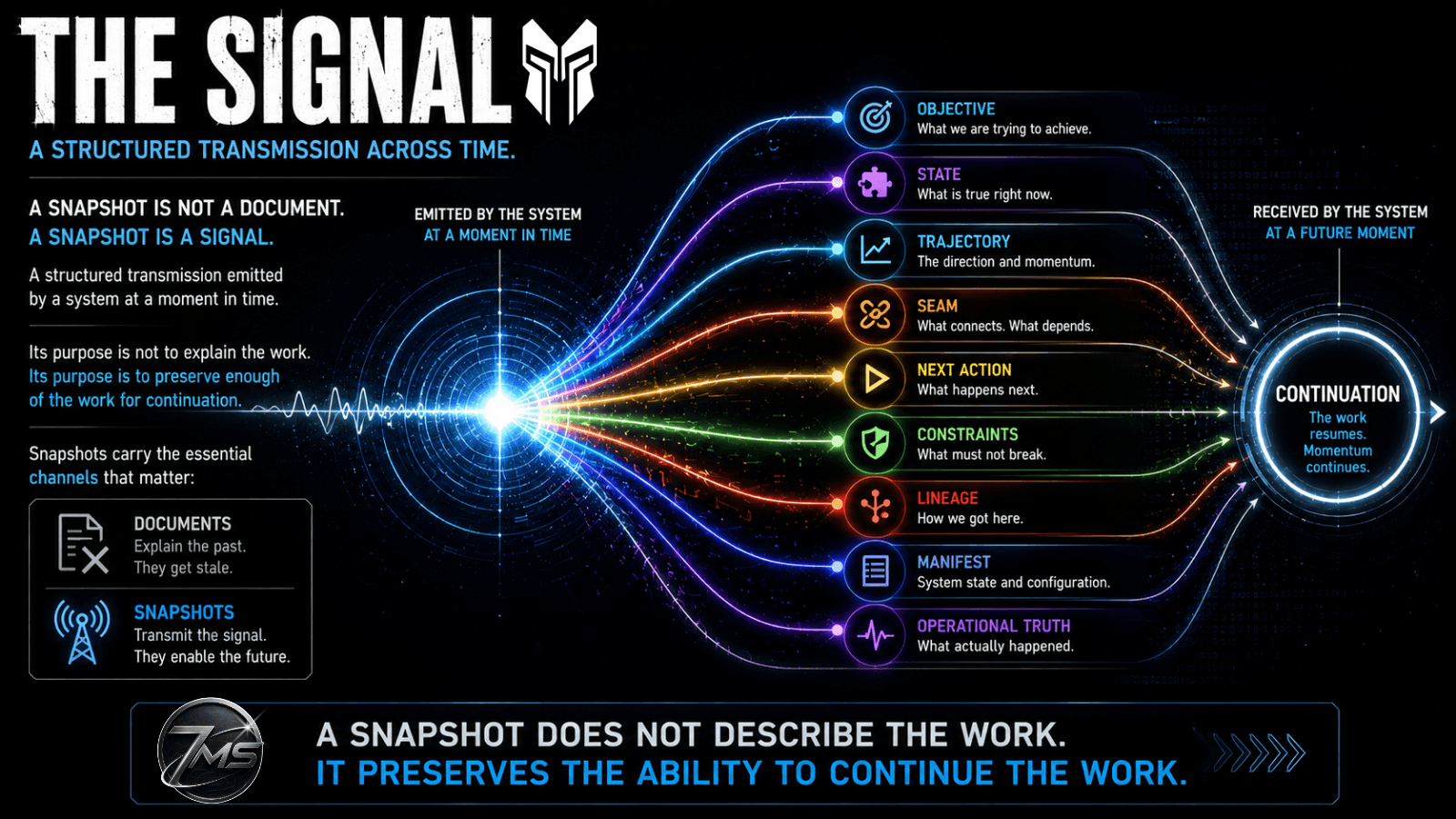
A snapshot is not a document.
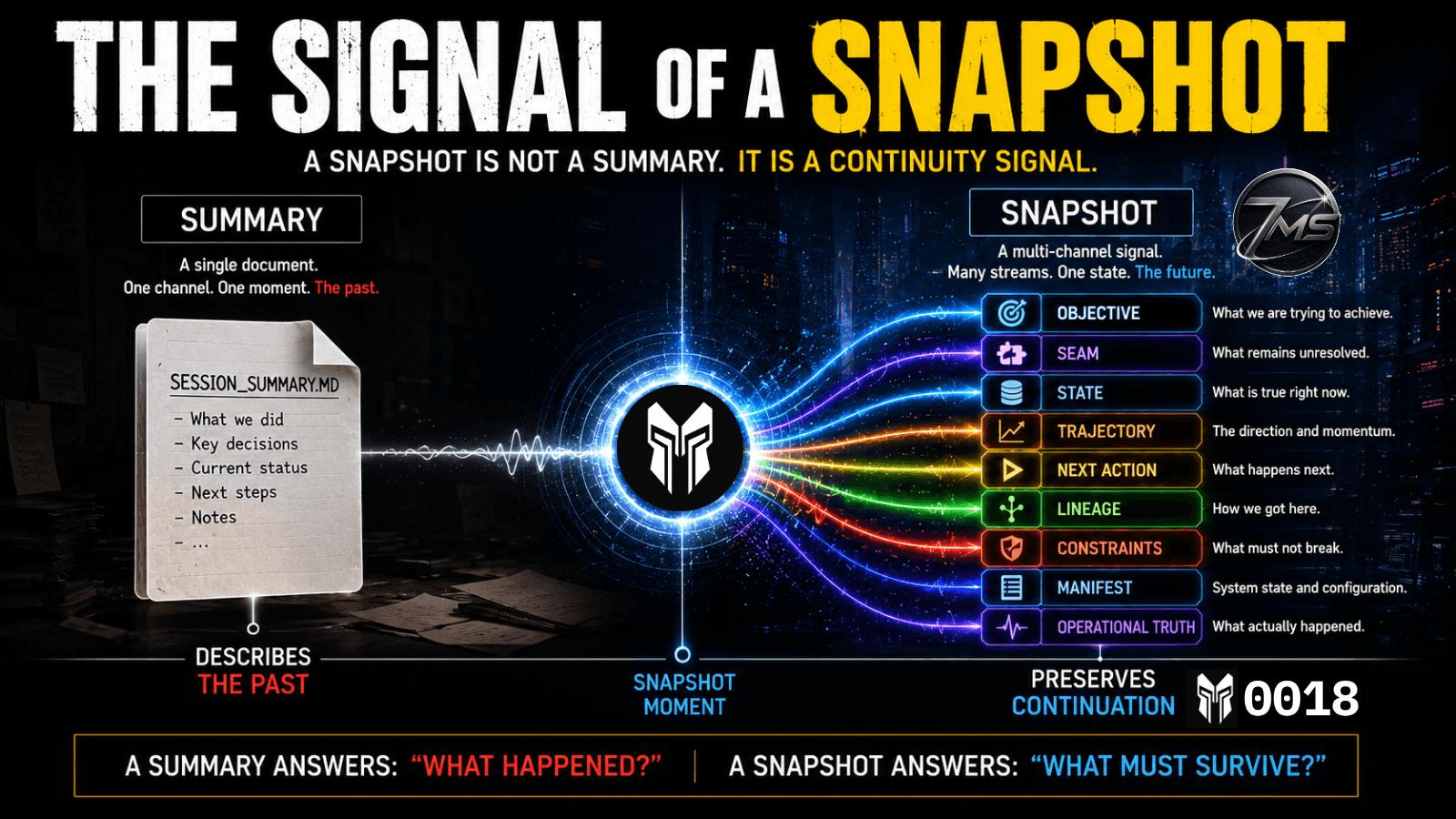
A snapshot is a signal.
A structured transmission emitted by a system at a moment in time.
Its purpose is not to explain the work.
Its purpose is to preserve enough of the work for continuation.
This is why snapshots care about things such as:
Objectives.
State.
Trajectory.
Seams.
Constraints.
Lineage.
Next actions.
The signal is not describing the past.
The signal is preserving continuation.
The industry often treats continuity as a storage problem.
Store more information.
Store more context.
Store more notes.
Store more history.
But storage alone cannot preserve progression.
A project can possess perfect documentation and still lose continuity.
Because continuity depends on preserving state.
Not merely information.
This is why continuation systems behave differently from memory systems.
Memory preserves the past.
Continuity preserves the future.
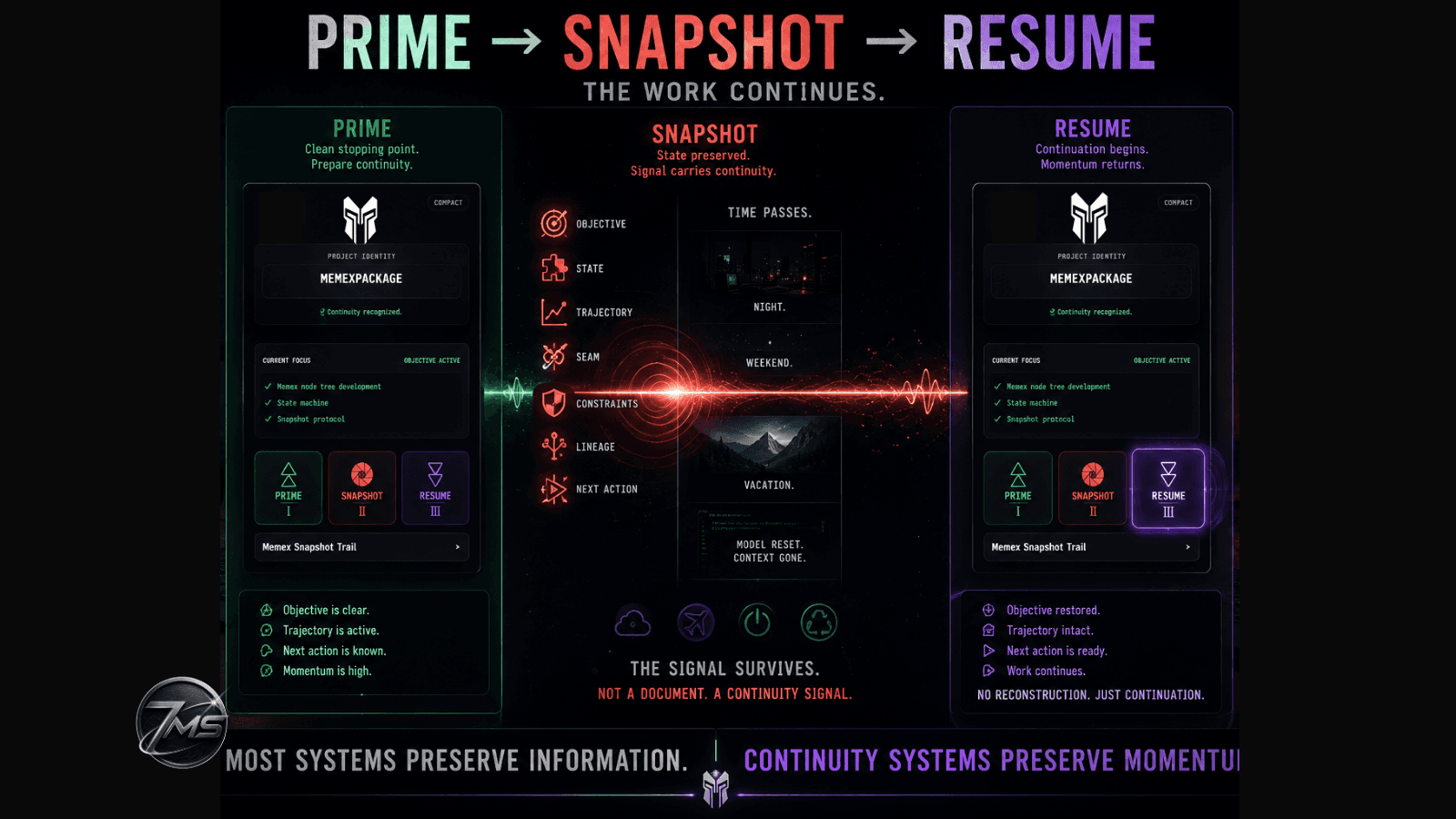
A builder reaches a clean stopping point.
Prime.
A continuity signal is prepared.
Snapshot.
State is preserved.
Time passes.
Resume.
Continuation begins again.
The objective survives.
The trajectory survives.
The next action survives.
The work continues.
Not because the system remembered everything.
Because the system preserved enough.
A summary describes the work.
A snapshot preserves the work.
The difference appears small.
Until the project becomes large enough that reconstruction becomes expensive.
Then the distinction becomes obvious.
The industry has spent years improving summaries.
Continuity begins when summaries are no longer responsible for carrying the future.
A snapshot is not a note.
A snapshot is a signal.
Previous Snapshot
• Somehow We Built Frontier AI And Got Pac-Man
Related Seam
• What Is Continuity Engineering?
Related Compass
Related Doctrine
• Continuity Is a Runtime Problem