

What Is AI Continuity?
AI continuity is the preservation of reasoning progression across time. While memory preserves information, continuity preserves the state, momentum, and trajectory that allow work to continue without reconstruction.
by
AI systems have become remarkably good at reasoning.
They can write software.
Analyze documents.
Generate plans.
Solve complex problems.
Yet despite these advances, long-running work often encounters a familiar failure.
The work stops.
The system restarts.
Progress must be reconstructed.
This problem is often described as a memory problem.
But memory and continuity are not the same thing.
When people describe continuity, they often imagine a system that remembers.
Past conversations.
Past decisions.
Past documents.
Past interactions.
The assumption is straightforward.
If enough information is preserved, continuity should naturally follow.
Yet long-running projects repeatedly demonstrate otherwise.
Information can survive.
Continuity can still collapse.
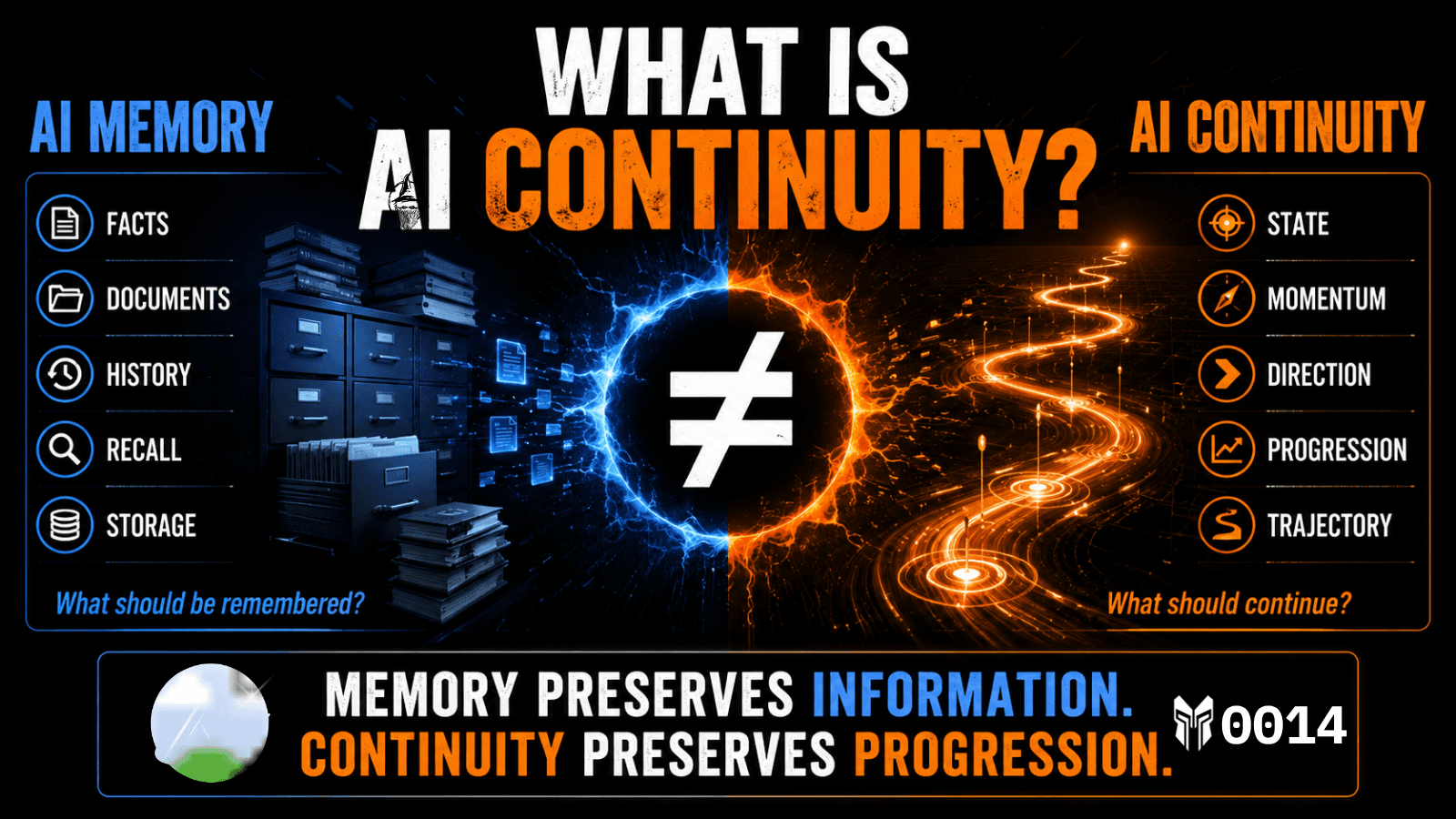
Memory preserves information.
Continuity preserves progression.
Memory answers:
What happened?
Continuity answers:
What was happening?
This distinction appears small.
But it changes everything.
A system may remember every conversation and still lose continuity.
A system may retain every document and still lose direction.
The information survives.
The progression does not.
Imagine two systems.
The first preserves:
documents
conversations
facts
references
The second preserves:
active state
unresolved decisions
direction
momentum
trajectory
Both preserve something.
But they preserve different things.
The first preserves information.
The second preserves continuity.
This difference becomes visible during long-running work.
A project may contain:
complete documentation
searchable history
extensive memory
Yet every interruption creates a cost.
The system must determine:
Where was I?
What was unresolved?
What mattered most?
What was I moving toward?
These questions are not information retrieval questions.
They are continuity questions.
Context improves awareness.
A model with better context can reason more effectively.
This is valuable.
But context primarily concerns the present.
Continuity concerns time.
Context answers:
What should the system know right now?
Continuity answers:
What must survive so the process can continue?
These are different problems.
One improves understanding.
The other preserves progression.
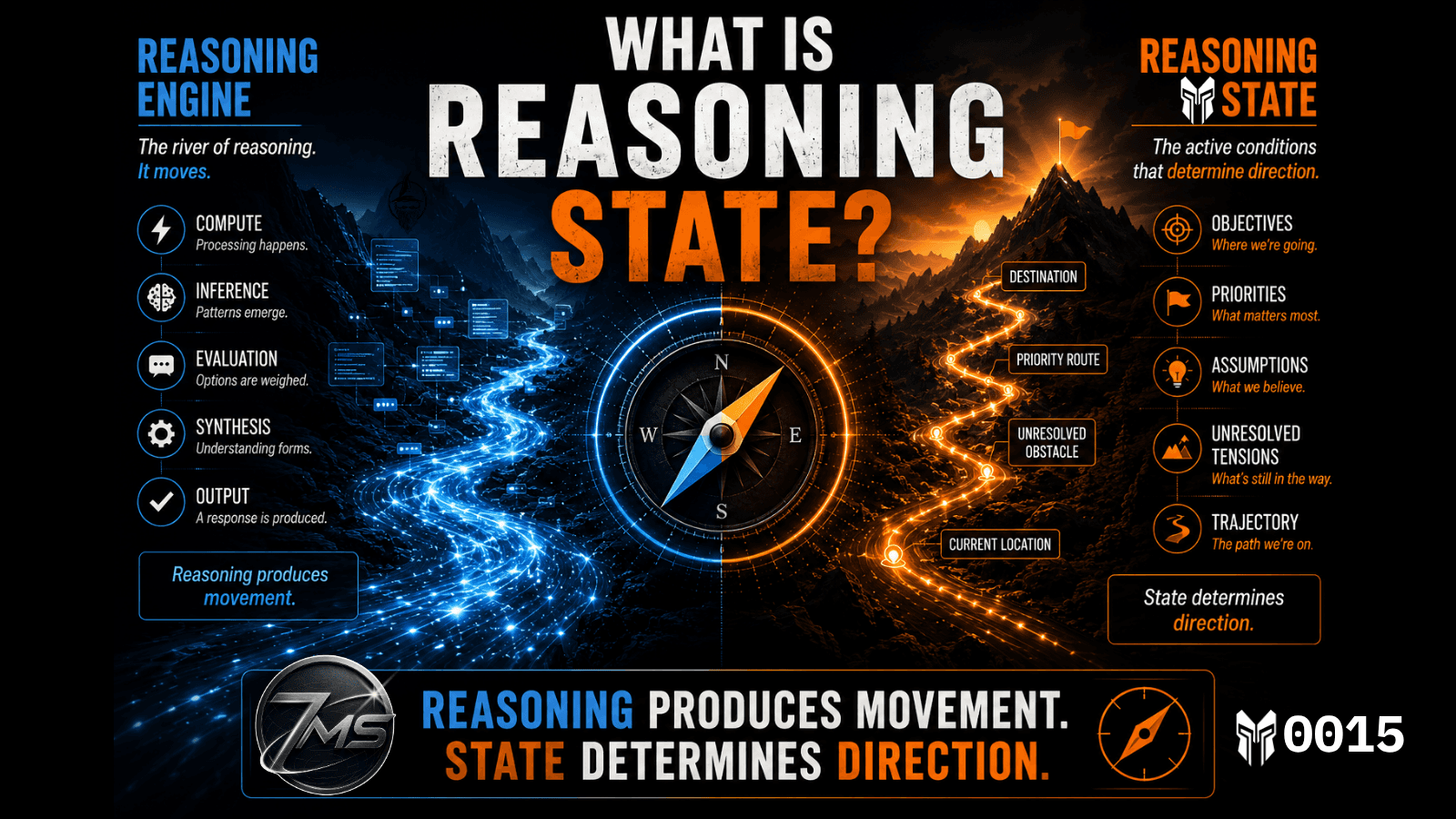
If memory preserves information, continuity preserves state.
State includes things such as:
objectives
assumptions
active tensions
unresolved boundaries
trajectory
momentum
These elements allow work to continue without repeatedly reconstructing itself.
When state survives interruption, continuity survives interruption.
As AI systems become more persistent, continuity becomes increasingly important.
Memory systems preserve the past.
Continuity systems preserve the ability to continue.
Both are valuable.
Neither replaces the other.
But they solve fundamentally different problems.
Understanding that distinction changes how long-running reasoning systems are designed.
Memory preserves information.
Continuity preserves progression.
Memory helps a system remember.
Continuity helps a system continue.
The distinction is subtle.
But as AI systems move from isolated conversations toward long-running work, it may become one of the most important distinctions in the field.
Previous Snapshot
Related Seam
• The Difference Between Knowledge and State
Related Compass
• Why AI Memory Is Solving The Wrong Problem
• Why Context Engineering Is Not Continuity Engineering
Related Doctrine
• Continuity Is a Runtime Problem