What Is Reasoning State?
Reasoning is often described as a process.
A model receives information.
The model evaluates that information.
The model produces a response.
This description is useful.
But it quietly hides something important.
Reasoning never occurs in isolation.
Every reasoning process operates within a state.
The Missing Layer
When people discuss AI systems, they often focus on information.
Documents.
Knowledge.
Instructions.
Context.
These things influence reasoning.
But they are not reasoning itself.
Reasoning unfolds within a larger structure that determines how information is interpreted.
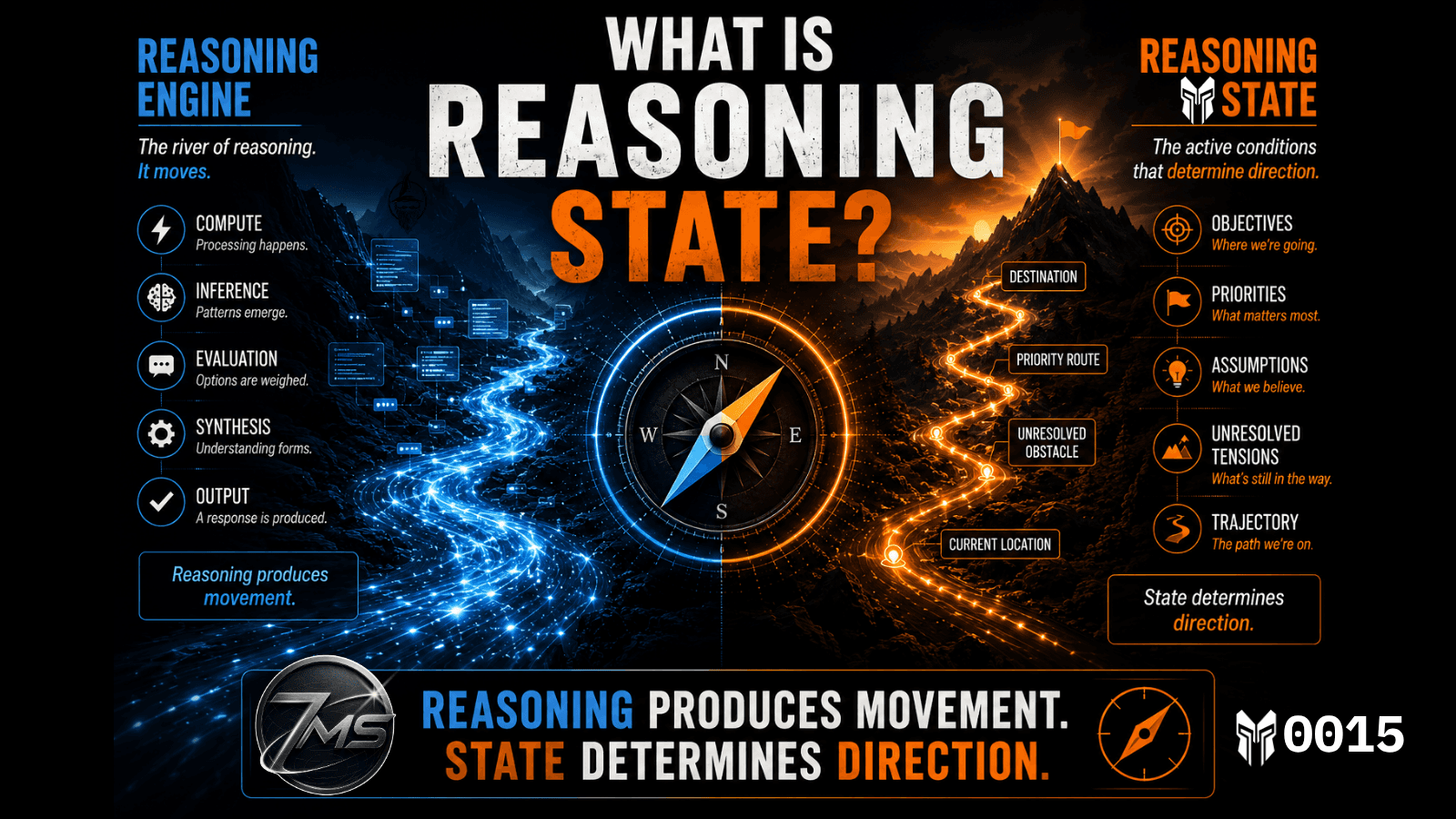
That structure can be understood as reasoning state.
What State Means
State describes the conditions that exist while reasoning is occurring.
Examples may include:
objectives
priorities
assumptions
unresolved questions
active tensions
constraints
direction
These elements influence every decision that follows.
Change the state and the reasoning changes.
Even if the information remains identical.
Information Is Not State
Imagine two systems.
Both possess the same documents.
Both possess the same history.
Both possess the same knowledge.
Yet one system is attempting to solve a problem.
The other is attempting to explain it.
The information is identical.
The reasoning is not.
Why?
Because the state is different.
Information provides awareness.
State provides orientation.
The Long Project Problem
This distinction becomes increasingly important during long-running work.
Projects rarely fail because information disappears.
More often, the project loses its active state.
The system forgets:
What mattered most.
What remained unresolved.
What decisions were pending.
What trajectory was being pursued.
The documents survive.
The reasoning state does not.
State And Continuity
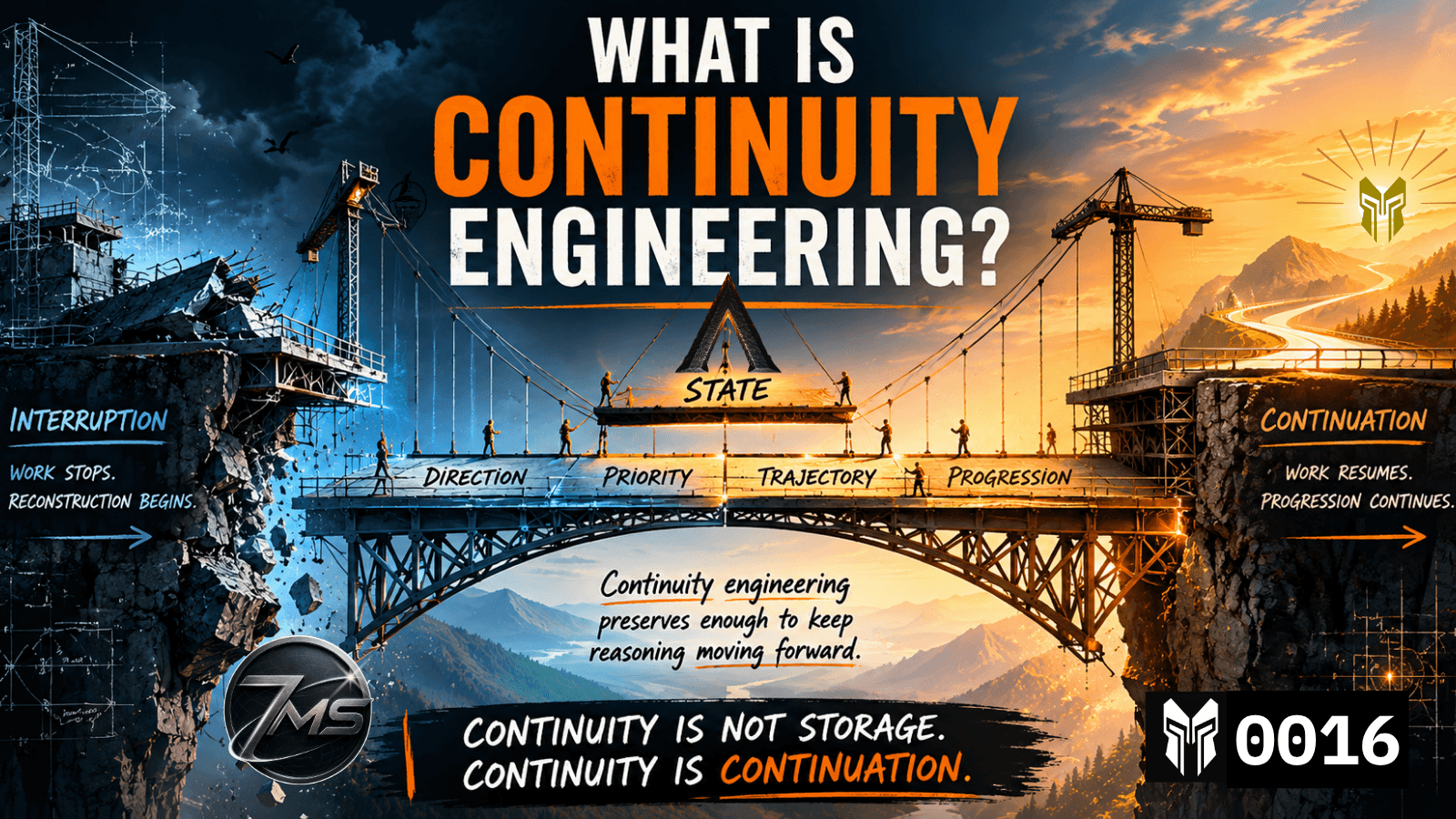
This is where continuity enters the picture.
If continuity preserves progression, then something must survive for progression to continue.
That something is state.
Without state, work must be reconstructed.
Priorities must be rediscovered.
Direction must be re-established.
Momentum must be rebuilt.
The system begins again.
Why Memory Is Not Enough
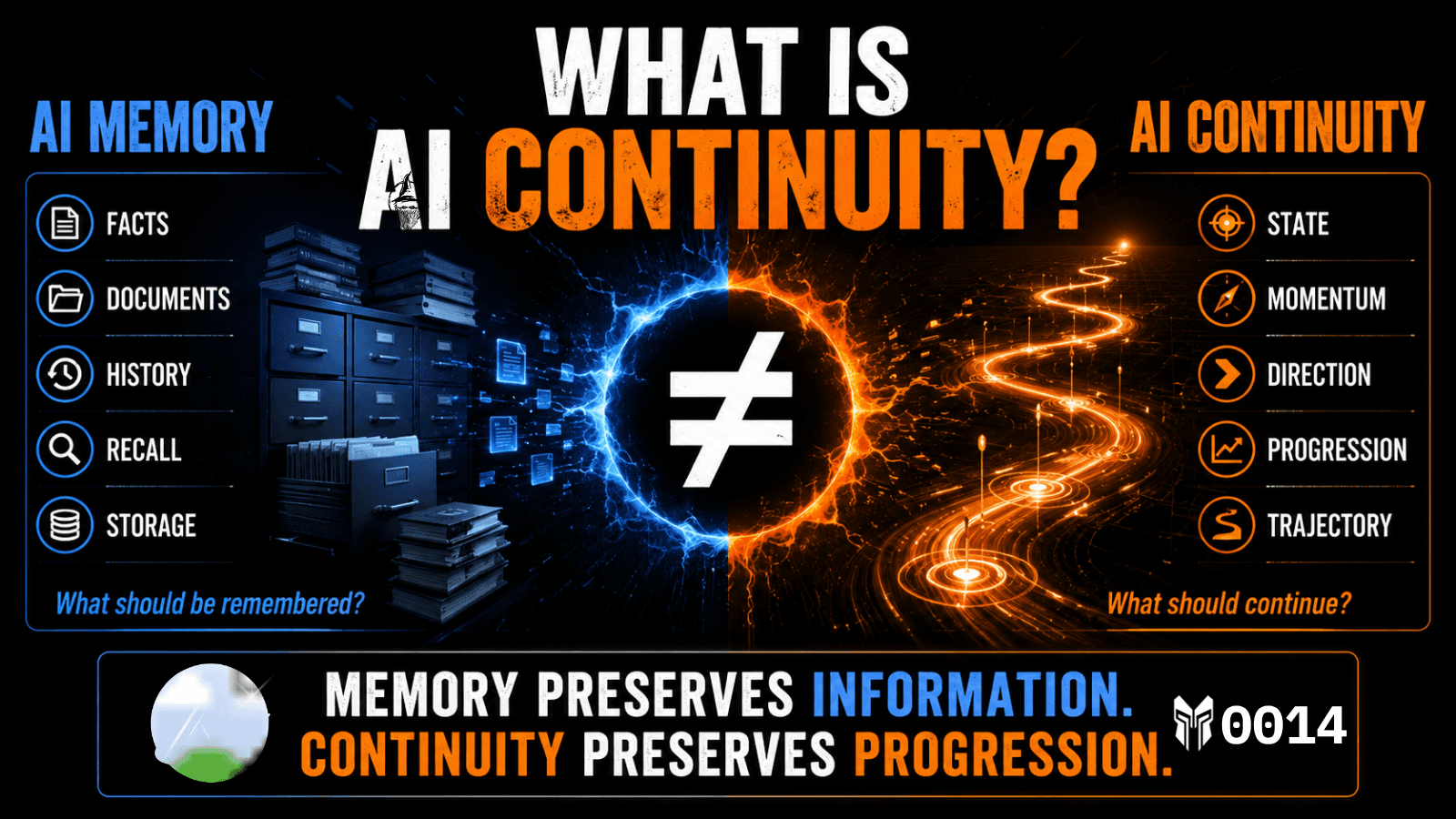
Memory systems are designed to preserve information.
This is valuable.
But information alone does not reactivate a reasoning process.
A system may remember everything.
And still lose continuity.
Because continuity depends on preserving the conditions under which reasoning was unfolding.
Not merely the information that was available.
The State Layer
As AI systems become increasingly persistent, a new question begins to emerge.
Not:
What should the system remember?
But:
What state must survive so reasoning can continue?
This question shifts attention away from storage and toward continuity.
Away from information and toward progression.
Away from memory and toward state.
Why The Distinction Matters
Understanding reasoning state changes how continuity is understood.
Information influences reasoning.
State shapes reasoning.
Both matter.
But they solve different problems.
One improves awareness.
The other preserves orientation.
The Compass Perspective
Information tells a system what is known.
State determines what happens next.
Memory preserves information.
Continuity preserves state.
And if continuity is to survive interruption, the reasoning state may be the most important thing that survives.
Previous Snapshot
• What Is AI Continuity?
Related Seam
• The Difference Between Knowledge and State
Related Compass
• Why AI Agents Still Restart
• Why AI Memory Is Solving The Wrong Problem
Related Doctrine
• What Is Memex?
• Continuity Is a Runtime Problem
• The River and the Gong